
Why anyone runs the network
Part 3 explained how the network agrees. It left a question that every beginner asks and most explanations skip:
If no company is paying people to run the network, why would anyone keep doing it?
The answer is economic incentives, and it is worth one short page because it makes the rest of Web3 legible. Once you see that miners, validators, block producers and liquidators are all being paid to do something, a lot of otherwise mysterious behaviour stops being mysterious.
Learning objectives
- Explain why a decentralised network has to pay its participants
- Describe how Bitcoin and Ethereum each reward the people securing them
- Explain what the halving and the base fee burn actually do
- Distinguish running a node from earning protocol rewards
Core
Somebody has to do the work
A blockchain needs independent participants to verify transactions, propose blocks and keep the shared history going. That work costs real money — electricity, hardware, locked-up capital, time.
There is no employer. So the protocol itself pays.
The design goal
Make honest participation profitable, and make attacking the network expensive. Every incentive below exists to serve that one sentence.
Bitcoin — paying miners
Bitcoin miners spend real money on hardware and electricity. The miner who successfully produces a block receives:
| Income source | Explanation |
|---|---|
| Block subsidy | Newly issued BTC, created by the protocol |
| Transaction fees | Paid by the people whose transactions are in that block |
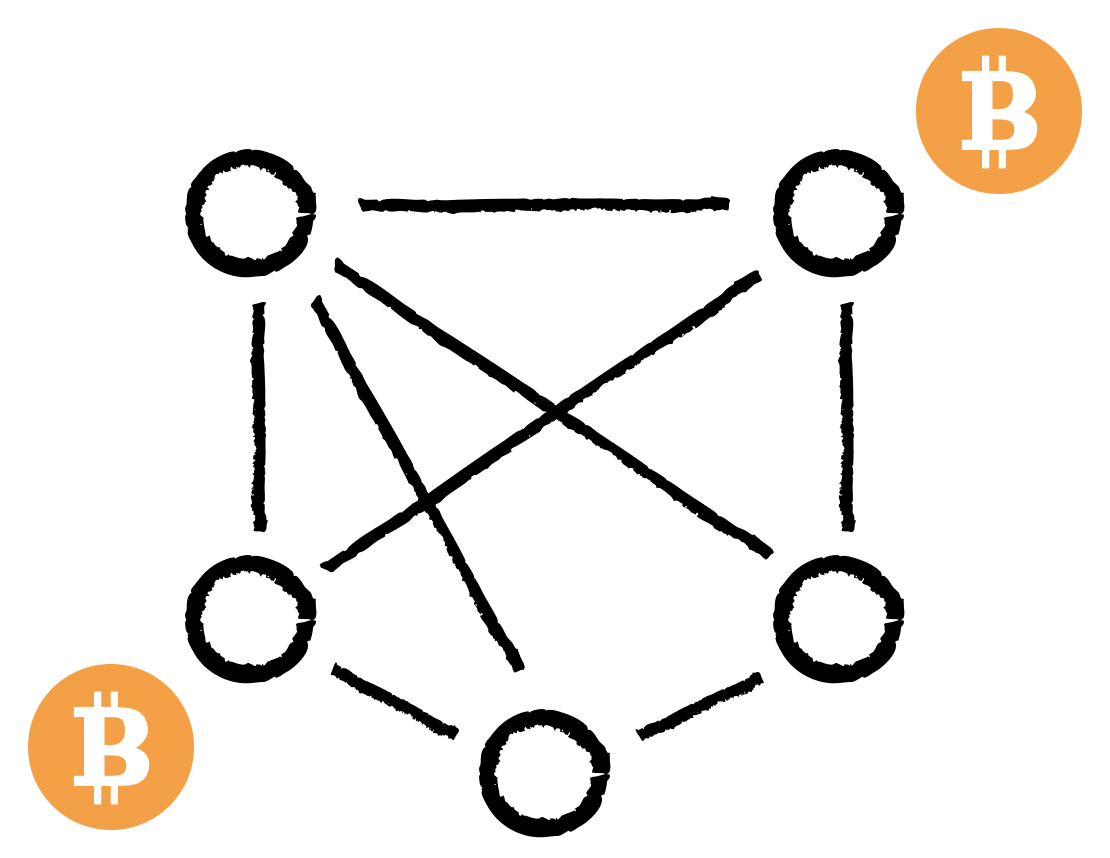
The subsidy is not constant. Roughly every four years it is cut in half, in an event called the halving. Fewer new BTC are created per block over time, and total supply approaches a fixed limit of 21 million.
What the halving does — and what it does not do
The halving reduces the rate at which new BTC enters circulation. That creates a predictable supply schedule.
It does not mean the price goes up. Whether BTC becomes more valuable is determined by market demand, not by the issuance schedule. You will hear "halving therefore number go up" stated as if it were arithmetic. It is not, and recognising that is part of understanding this properly.
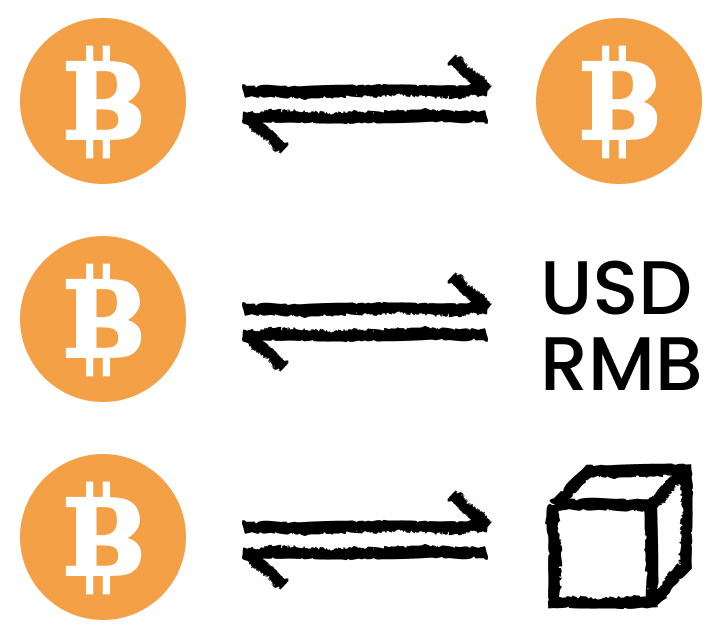
Over the long run, as the subsidy shrinks, transaction fees are expected to make up more of what miners earn. Whether that is enough to secure the network in future is a genuine open debate — and a good example of an unsettled question in a field that often pretends everything is settled.
Ethereum — paying validators, and burning fees
Ethereum uses Proof of Stake, so the mechanism differs. Validators lock ETH as stake and help propose and attest to blocks. Honest validators earn ETH; provable dishonesty can have stake slashed.
Ethereum also does something Bitcoin does not. Part of every transaction fee — the base fee — is permanently destroyed rather than paid to anyone.
Two forces pull in opposite directions:
- issuance creates ETH to pay for security
- burning removes ETH whenever the network is used
When activity is high, the burn can exceed issuance and supply temporarily shrinks — sometimes described as net deflationary. When activity is quiet, issuance can be higher. Neither state is permanent, and neither is a prediction about price.
Running a node is not the same as earning rewards
A distinction beginners get wrong constantly
Running a full node does not pay you. A full node independently verifies the chain — that is its value, and it is genuinely valuable — but the protocol does not send you rewards for having one online.
Rewards go to miners in Proof of Work and validators in Proof of Stake. Those are specific roles with specific costs, not "anyone with the software installed".
People run full nodes anyway: to verify rather than trust, to avoid depending on someone else's RPC provider (Week 2 Part 4), and because businesses need reliable access to chain data.
Side by side
| Dimension | Bitcoin | Ethereum |
|---|---|---|
| Security model | Proof of Work | Proof of Stake |
| Who secures it | Miners | Validators |
| Main reward | Newly issued BTC + transaction fees | ETH staking rewards + priority fees |
| Supply model | Fixed maximum of 21 million BTC | No fixed maximum |
| Issuance | Block subsidy halves roughly every four years | New ETH issued to reward validators |
| Fee mechanism | Fees go to miners | Base fee burned; priority fee to validators |
The takeaway
Both networks use their native asset to pay for security, but the economic designs are genuinely different. Bitcoin commits to a fixed long-term supply. Ethereum combines validator issuance with fee burning, so supply responds to how much the network is used.
Neither design is "better". They are answers to different questions.
Landscape
- Block reward — subsidy plus fees, paid to whoever produces the block. It is the direct economic reason to compete for block production
- Halving — Bitcoin's roughly four-yearly subsidy reduction. It slows new issuance but does not guarantee a price increase
- Base fee / priority fee — the burned portion and the tip, introduced by EIP-1559 (Week 2 Part 4). They go to different places, so the proposer does not receive the whole fee
- Staking pool — pooling ETH so people can participate economically without holding 32 ETH or operating a validator alone. The pool adds operator and service risk
- Liquid staking — a tradable token representing staked ETH. It may be used elsewhere, but it can trade away from the underlying value
- Issuance vs burn — new supply created versus supply destroyed. Comparing them helps explain whether supply is growing or shrinking at a given time
- MEV — profit that can come from choosing transaction order. Someone else may move before your trade and worsen the price you receive; it is Further Exploration
Worked example
Where does the fee on your Week 1 transaction actually go?
You will send a Sepolia transaction in Part 7 and pay a small fee. On Ethereum mainnet, that fee splits:
| Portion | Goes to | Why |
|---|---|---|
| Base fee | Nobody — destroyed | Prices congestion. Burning it means the block proposer does not directly receive the base fee |
| Priority fee | The block proposer | Your tip for being included sooner |
That first row is worth a moment. The base fee is set by demand and then burned, specifically so that whoever picks transactions has less incentive to manipulate the congestion price for their own benefit. The block proposer does not directly receive the base fee.
This is what "incentive design" means in practice
Not slogans about decentralisation — a concrete decision that removes a specific conflict of interest. When you meet a new protocol, the useful question is the same one: who gets paid, for doing what, and what does that encourage them to do?
Further exploration — optional, not assessed
- ethereum.org — Staking — what validators actually commit to
- ethereum.org — Rewards and penalties — precisely how validators are paid and slashed
- Bitcoin whitepaper — section 6, "Incentive", is half a page and states the argument in the original terms
- MEV, tokenomics and monetary policy — large fields, deliberately not compulsory here
Sources and attribution
- ethereum.org — Proof of stake rewards and penalties — Reuse (CC BY 4.0), adapted
- ethereum.org — Ethereum staking — Reuse (CC BY 4.0), adapted
- ethereum.org — Gas and fees — Reuse (CC BY 4.0), adapted
- ethereum.org — Nodes and clients — Reuse (CC BY 4.0), adapted
- Bitcoin whitepaper — Link, referenced only
- Web3 Internship Handbook — Reuse (permission granted); node-reward and Bitcoin monetary-properties visuals adapted from its blockchain basics materials
Named assets are illustrative. Nothing here is financial advice, and nothing here is a claim about future prices.